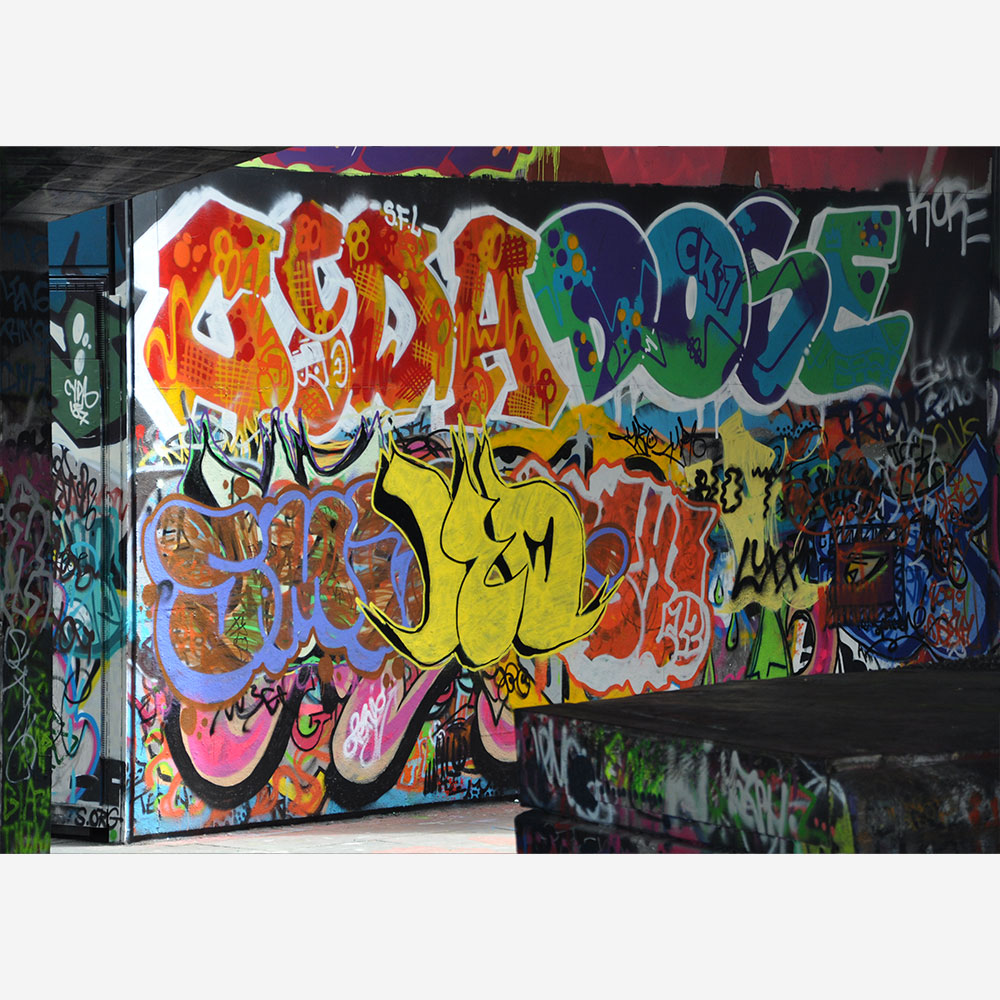
The Story Behind Graffiti South Bank
Graffiti is one of the most visible and widely publicised forms of contemporary expression, transforming urban landscapes into spontaneous, constantly evolving public galleries. From the initial acts of raw tagging to the complex, large-scale murals that adorn cities worldwide, it encompasses a diverse range of styles, mediums, and motivations. While its legality is frequently a point of fierce debate, its power to reclaim and redefine public space is undeniable, shaping how we experience the cityscape.
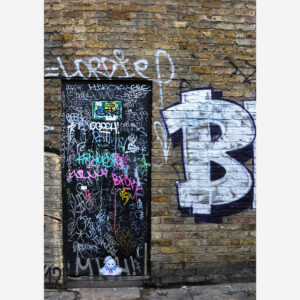
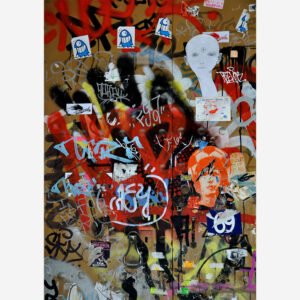
The genre is not a singular artistic practice but a collection of methodologies. The traditional aerosol tag, as seen in Graffiti Red and Graffiti Southbank remains fundamental – a quick, highly stylised signature that marks territory and presence, often on brickwork or doorways. Over time, these develop into more intricate pieces, with multi-coloured bubble letters and complex graphical compositions that demonstrate significant skill and planning. A notable example is Graffiti Southbank, illustrating how a single wall can contain everything from simple throw-ups to elaborate, vibrant works that seem to wrap around structural elements like pillars.
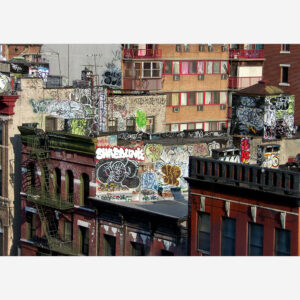
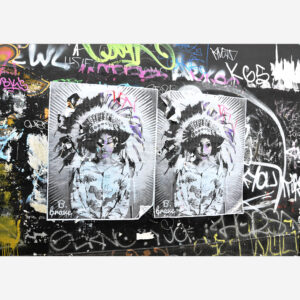
However, the field has expanded beyond spray paint. ‘Street art’, often considered a sub-genre or evolution, frequently utilises techniques like stencilling and paper paste-ups. Stencils, like the one featured in Graffiti B, allow for the rapid reproduction of detailed imagery and social commentary, and are often layered amongst sticker bombs and tags. Graffiti Twins showcases the visual complexity of paste-ups – intricately designed monochrome artworks printed on paper and glued to surfaces, providing a different texture and narrative, and often interacting with the existing graffiti on the wall. This layered accumulation, where new works cover or complement older ones, creates the dense tapestry we see on everything from single doors – Graffiti B, to entire rooftop panoramas – Graffiti New York where the art covers buildings, water towers, and even fire escapes.
Graffiti’s relationship with the public sphere is complex, perpetually poised on the boundary between destruction and creation. Often stemming from marginalized communities or used as a tool for political statement, it forces us to question who owns a wall and what counts as art. These installations are typically unsanctioned and fleeting, existing until they are painted over, removed, or weathered, adding to their raw, immediate impact. Yet, their very existence can be a powerful statement, an act of visibility for those who feel unheard.
Whether viewed as an aesthetic enrichment or an act of defiance, graffiti art’s influence on pop culture, design, and even mainstream fine art is indisputable. It is a dialogue, not a monologue; an ongoing conversation written across our walls. What was once seen solely as vandalism is increasingly recognised as a significant cultural force, a testament to the fact that sometimes, the most resonant art is not framed within a gallery, but scrawled across a brick wall or plastered onto a doorway, just waiting to be discovered.