The Story Behind Claude Monet’s House at Giverny
A journey into Claude Monet’s vibrant sanctuary at Giverny, where pink stucco, emerald shutters, and overflowing floral borders inspired the impressionist master to paint eternal harmonies of light and colour.
Nestled in the quiet village of Giverny along the Normandy border, Claude Monet’s home stands not merely as a historic residence, but as a living canvas. When the Impressionist master first spotted the property from a train window in 1883, he saw a blank landscape waiting to be sculpted. Over four decades, Monet transformed this modest farmhouse and its surrounding grounds into an explosion of colour, light, and architectural harmony that fuelled his most creative years.
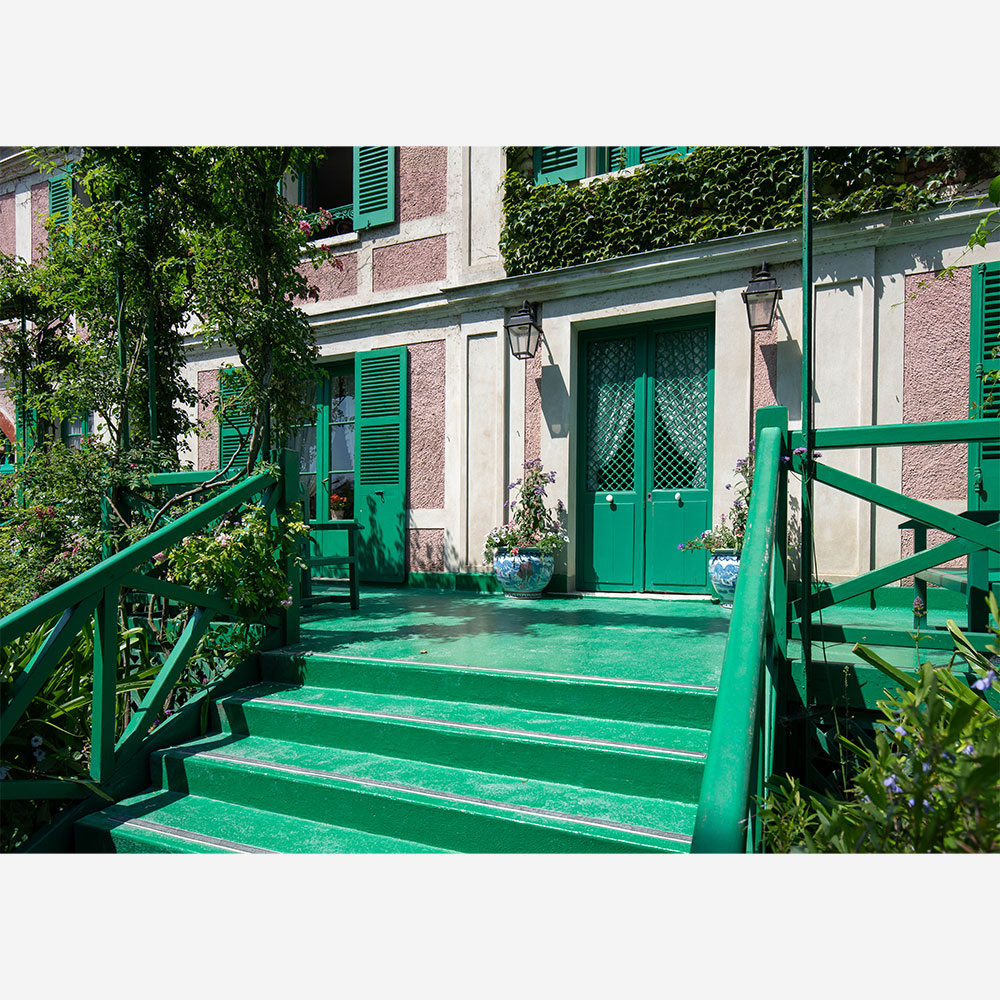
The house itself commands immediate attention with its distinctive and daring aesthetic. Breaking away from the muted, traditional style of nineteenth-century French countryside homes, Monet painted the exterior stucco a soft, radiant pink and framed the windows with vibrant, deep emerald shutters. This bold colour pairing creates an ongoing dialogue with the surrounding foliage. Wild climbing roses, lush ivy, and fragrant wisteria cling lovingly to the walls, softening the structural lines and blurring the boundary between human design and the natural world.
Standing along the central pathway of the Clos Normand garden, the view looking back toward the house feels almost transcendent. Monet approached gardening with the exact same painterly eye he brought to his canvases. He rejected rigid, formal French landscape traditions, preferring instead to mix flowers by colour, height, and blooming season. Rows of vibrant nasturtiums spill recklessly over gravel walkways, while tall hollyhocks, delicate irises, spring tulips, and autumn dahlias form layered, shifting tapestries of texture. Framed by iron arches draped in greenery, the pink house appears anchored in an endless sea of living pigment.
This brilliant artistic philosophy extended seamlessly into the interior of the home as well. Inside, Monet selected vivid shades of chrome yellow for the spacious dining room and dynamic blue tiles for the adjacent kitchen, ensuring that light danced through every room just as it did across the outdoor gardens. The expansive windows look directly out across the grounds, constantly framing the changing light throughout the day. Monet once remarked that apart from painting and gardening, he was good for nothing—a charmingly modest underestimation of how completely he had merged his everyday life with his creative output.
Today, visiting Monet’s house offers a rare, immersive connection to the origins of Impressionism. It remains a physical sanctuary where natural beauty and human artistic vision exist in complete equilibrium. The gentle rustle of wind through the leaves, the rich aroma of seasonal blooms, and the warm glow of afternoon sunlight against the pink facade reveal why this estate remained his infinite muse until his passing in 1926. To look upon the house nestled within its garden is to step directly inside a living masterpiece.