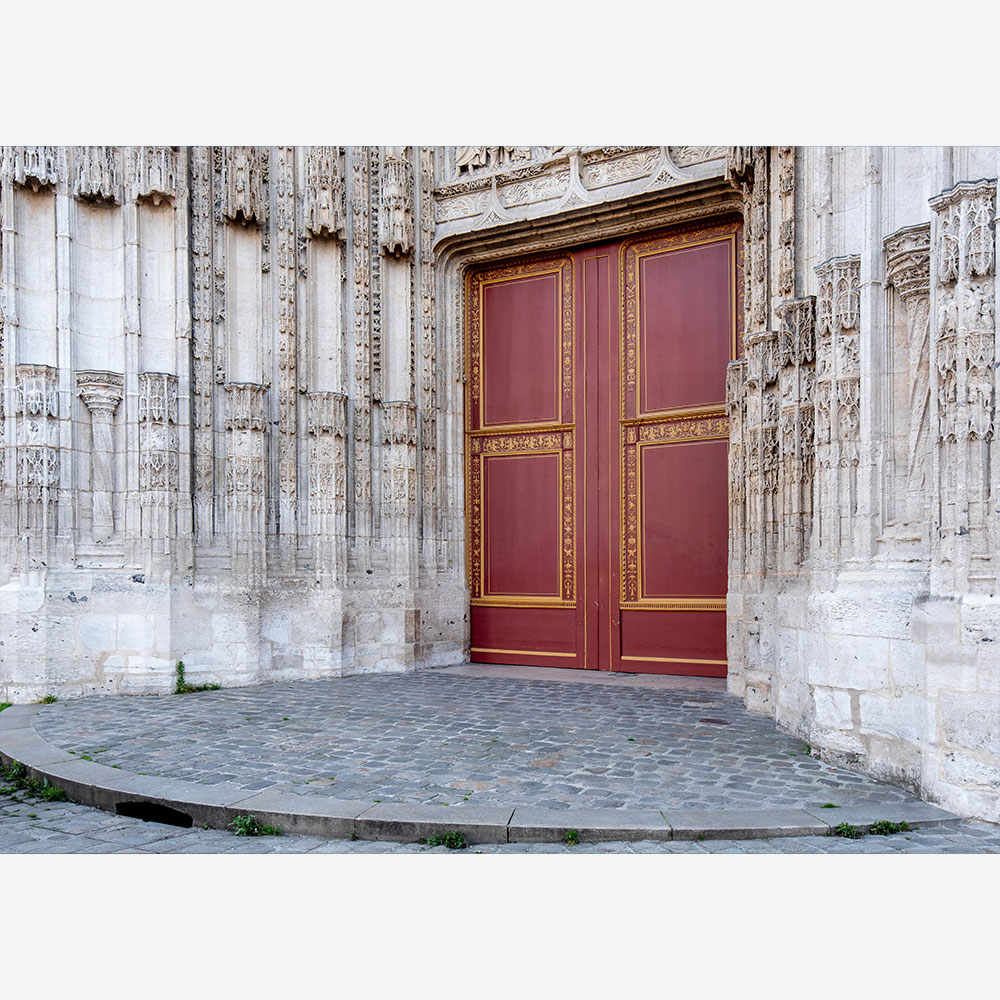
The Story Behind Stone and Crimson: The Intricate Portal of Rouen Cathedral
Echoes in Stone: The Masterpiece of Rouen Cathedral
Standing proudly in the heart of Normandy, the Cathédrale Primatiale Notre-Dame de l’Assomption de Rouen—commonly known as Rouen Cathedral—is one of France’s most magnificent achievements in Gothic architecture. Constructed over nearly eight centuries, this towering monument embodies the evolving artistic movements, spiritual devotions, and historical turmoil of northern Europe. From its ancient foundations to its celebrated place in modern art history, Rouen Cathedral remains an enduring symbol of resilience, craftsmanship, and aesthetic grandeur.
The roots of the cathedral reach back to the late fourth century when an early Christian basilica was established on the site. Over the centuries, subsequent structures were built, destroyed by Viking raids, and rebuilt into a grand Romanesque basilica consecrated in 1063 in the presence of William the Conqueror. However, as the new Gothic movement swept across Western Europe in the twelfth century, the church underwent a dramatic transformation. Beginning around 1145 with the construction of the Saint-Romain tower, architects demolished the older Romanesque structure to pave the way for a soaring Gothic masterpiece.
What makes Rouen Cathedral uniquely compelling is its rich architectural synthesis. Because construction spanned multiple eras, the building seamlessly incorporates Early Gothic, High Gothic, Flamboyant Gothic, and Renaissance elements. Its west façade, measuring over 61 meters wide, is a breathtaking tapestry of sculpted statues, intricate tracery, and asymmetrical towers. To the north stands the 12th-century Saint-Romain tower, while the south is flanked by the 16th-century Tour de Beurre (Butter Tower), named after donations paid by wealthy citizens to consume butter during Lent. At the centre of the structure rises the famous 19th-century cast-iron spire, reaching a height of 151 meters, which briefly made Rouen Cathedral the tallest building in the world from 1876 to 1880.
Beyond its physical architecture, the cathedral holds deep historical and royal significance. It serves as the final resting place for several prominent figures of medieval Europe, including Rollo, the Viking chieftain who became the first Duke of Normandy, and the embalmed heart of King Richard I of England (Richard the Lionheart), placed here to honour his passion for the Norman realm.
In the late 19th century, the cathedral captured the imagination of Impressionist master Claude Monet. Between 1892 and 1893, Monet rented rooms facing the west façade and produced over thirty canvases capturing the monument under varying conditions of light, weather, and time of day. His series demonstrated how light transformed stone into shifting fields of colour, securing the cathedral’s permanent place in global art history.
Despite enduring severe damage from fires and World War II bombings in 1944, meticulous restoration efforts have preserved the building for future generations. Today, Rouen Cathedral continues to inspire visitors and scholars alike, standing not merely as a place of worship, but as a living testament to human artistic ambition.