The Story Behind Echoes of D-Day: The Silent Remembrance of Ranville War Cemetery
In the initial hours of June 6, 1944, before the massive armada reached the beaches of Normandy, the night sky filled with gliders and parachutes. Operation Overlord—the Allied invasion to liberate Western Europe—began in darkness. The easternmost flank was assigned to the British 6th Airborne Division. Their mission was critical: secure the eastern flank, seize vital bridges over the Caen Canal and the River Orne, neutralise the artillery battery at Merville, and prevent German armoured counterattacks.
By zeroing in on their targets, the paratroopers achieved early success. Lieutenant Den Brotheridge led a glider assault that captured the Caen Canal Bridge (later renamed Pegasus Bridge). Fallen in that action, Brotheridge became one of the first Allied combat fatalities of D-Day. Nearby, the 13th Battalion, Parachute Regiment, secured Ranville, making it the very first village in France to be liberated on D-Day.
The early success came at a steep human cost. The fallen needed a resting place, and burials began almost immediately in the churchyard of Notre-Dame in Ranville. As fierce fighting raged across Normandy throughout June, July, and August, the local burial ground overflowed, leading to the establishment of the adjacent Ranville War Cemetery.
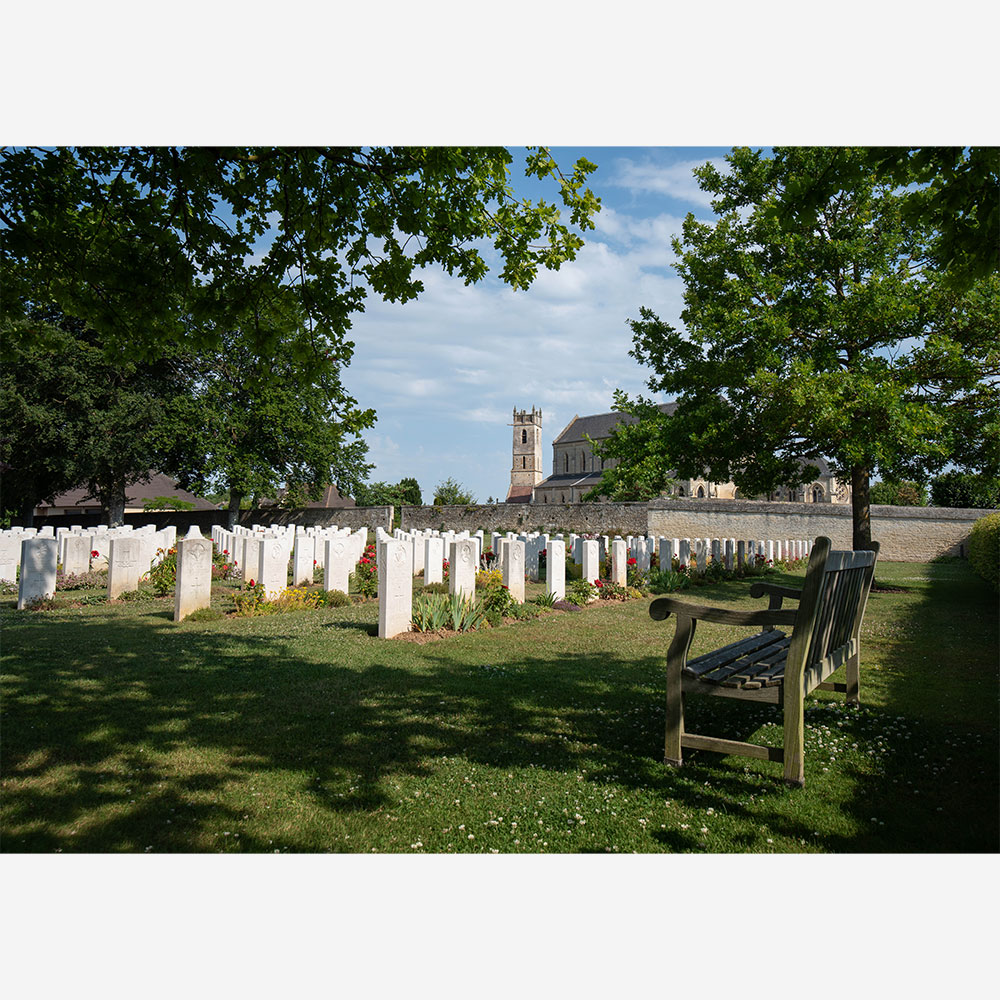
Today, the site is maintained by the Commonwealth War Graves Commission (CWGC). It holds over 2,200 Commonwealth servicemen, alongside more than 300 servicemen from other nations, including France, Belgium, Poland, and Germany. In keeping with the spirit of reconciliation that characterizes postwar Europe, fallen enemies lie in the same soil. Adjacent in the original churchyard lie an additional 47 Commonwealth casualties.
The headstones at Ranville tell poignant individual stories. Among them is Lieutenant Den Brotheridge, buried in the churchyard close to where he fell. Another notable grave belongs to Private Emile Corteil of the 9th Parachute Battalion, who was killed alongside his paradise-bound scout dog, Glenn; they are buried together in a single plot. The cemetery also reflects the tragic breath of ages involved: the youngest soldier buried here is Private Robert Johns, who was killed at just 16 years old, while the oldest is Brigadier Denis Sanders, who died at age 49.
Ranville War Cemetery remains a place of quiet reflection. Framed by manicured lawns, flower beds, and the ancient church tower rising in the background, the pale stone markers stand in precise rows. It serves as a reminder of the airborne soldiers who paved the way for the liberation of Europe, marking both the beginning of Normandy’s freedom and the permanent resting place of those who secured it.