The Story Behind The Silver Ribbons of Amsterdam
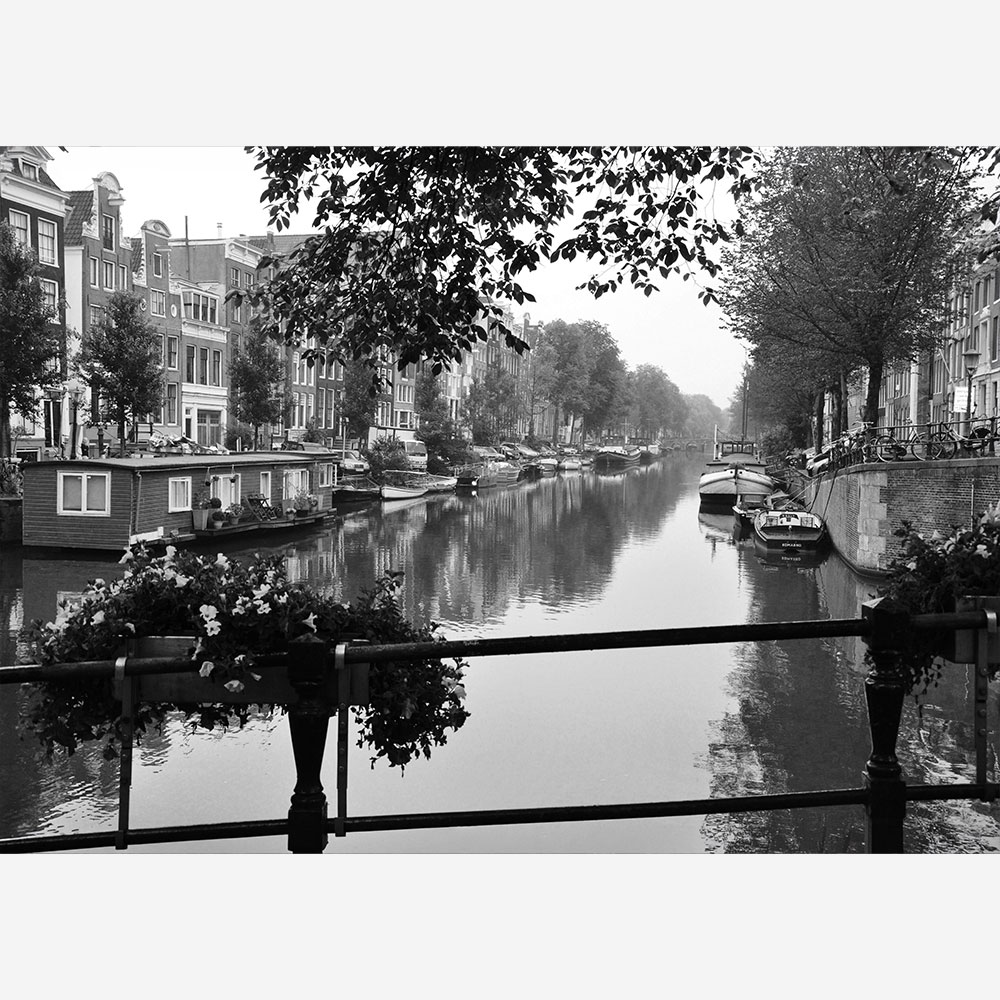
There is a quiet magic to Amsterdam when the colour is stripped away, leaving only the raw skeleton of its history in shades of charcoal, silver, and slate. In monochrome, the city sheds its modern distractions and steps backward in time. Standing on the stone crest of a bridge, looking down the long, liquid spine of the canal, you are not just looking at a street made of water—you are looking at a living mirror.
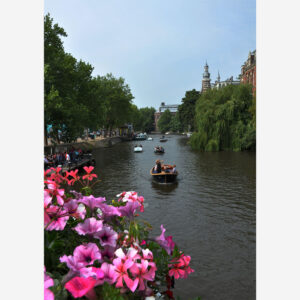
In the immediate foreground, the wrought-iron railing of the bridge anchors the view, draped in heavy flower boxes. Though stripped of their vibrant petals, the flowers still possess a delicate texture, their pale faces catching the soft, diffused northern light. Above, a canopy of leafy branches arches over the water like a natural proscenium arch, framing a timeless tableau. The leaves filter the pale sky, casting intricate shadows that dance subtly with the breeze.
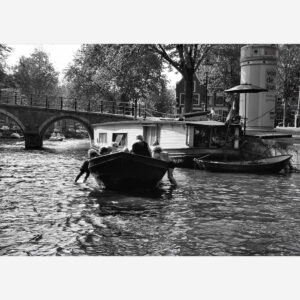
The canal itself is a highway of stillness. Its surface is glassy, broken only by the gentlest ripples that warp the reflections of the world above. On the left, a collection of houseboats sits moored against the cobblestone quay. One particularly grand houseboat occupies the foreground, its dark wood siding and white-framed windows suggesting a cozy, self-contained life on the water. Pots of plants sit on its narrow deck, a miniature garden floating on the tide. Behind it, the iconic canal houses rise like a row of mismatched teeth—tall, narrow, and leaning slightly forward as if whispering secrets to the water below. Their gabled roofs, a signature of 17th-century Dutch architecture, cut a jagged silhouette against the overcast sky.
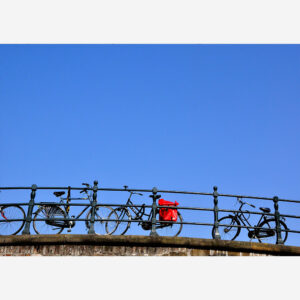
On the right bank, the heavy brick masonry of the canal wall stands as a sturdy bulwark against time. Moored along its edge are smaller watercraft, tucked tightly into the stone flank. Further down the path, a faint line of bicycles leans casually against the upper railings—the ubiquitous, silent sentinels of Amsterdam life. The trees on this side grow taller and denser, their trunks disappearing into the hazy perspective where the canal bends out of sight.
Without colour, the composition relies entirely on light, contrast, and geometry. The leading lines of the canal banks and the rows of buildings draw the eye deep into the background, where the details begin to dissolve into a soft, misty grey. It feels like an early morning before the city fully wakes, a fleeting moment of profound tranquility before the tour boats churn the water into foam and the ringing of bicycle bells fills the air.
In this frame, Amsterdam is a city of echoes. It is a place where the past isn’t buried underneath the present, but floats alongside it, perfectly preserved in the silver reflections of its ancient waterways.