The Story Behind Beauty Parade
BEAUTY PARADE: Beach Hunts on the Kent Coast, UK
The British seaside is a peculiar masterpiece of contradiction. It is a place where joy is often measured by the fortitude one displays in the face of a bracing gale, and where the most cherished memories are tinted with the salt-crust of faded glory.
The Sentinels of the Shore
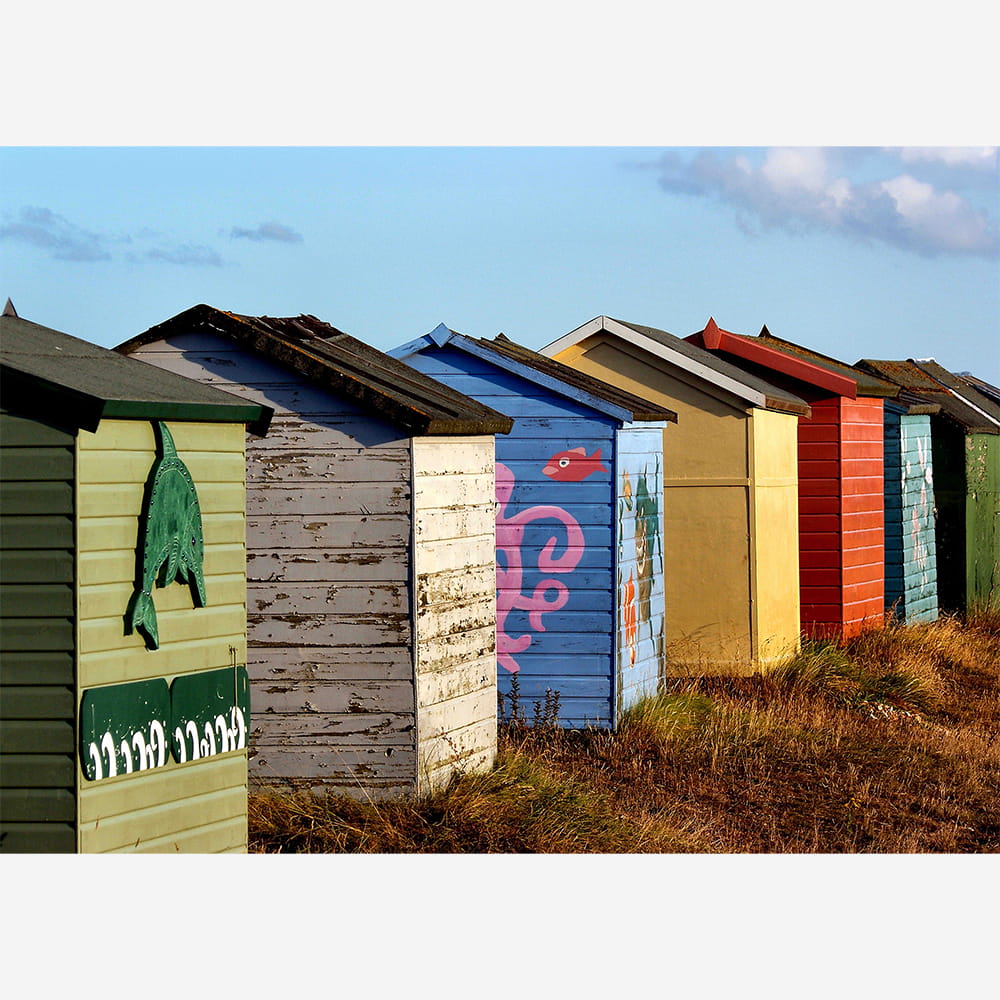
Nothing encapsulates this spirit quite like the beach hut. These timber boxes, standing in defiant, uneven rows against the North Sea, are more than just storage; they are outposts of domesticity on the edge of the wild. Looking at the peeling paint of a pale blue hut or the sun-bleached timber of a yellow one, you don’t see decay, you see a history of summers.
There is an inherent charm in their gaudy colours. They are painted in shades that would be considered an architectural crime in a leafy suburb: electric blues, post-box reds, and mint greens. Yet here, against the shifting greys of the water and the pale gold of the marram grass, they are essential. They provide a brave splash of human defiance against the vast, indifferent horizon.
The Ritual of the Day
A seaside holiday is governed by specific, sacred rituals. It begins with the heavy clunk of the oversized padlock and the creak of the wooden doors, revealing a cramped interior that smells of old canvas, dried sand, and life-long summers.
Then comes the centrepiece of the British beach experience: picnics and flasks of tea. There is a specific physics to a beach picnic; the wind ensures that a fine seasoning of sand finds its way into every cheese sandwich. The tea, poured from a thermos into a plastic cup that’s slightly too hot to hold, is a liquid hug. It is the fuel of the resilient holidaymaker, the only thing capable of warming the bones after a “refreshing” (read: bone-chilling) dip in the surf.
The Sensory Memory
The true texture of these memories, however, is found in the towelling off after a swim. There is a very particular sensation of standing on a wooden floorboard, shivering uncontrollably, while a parent vigorously rubs a rough, salt-stiffened towel against your back. It’s a moment of transition from the wild, chaotic energy of the waves back to the safe, enclosed warmth of the hut.
A Legacy of Simple Joys
As we look at these weathered structures, we see a reflection of ourselves. The seaside isn’t about perfection; it’s about the beauty of the worn-out and the well-loved.
The Fading Paint: A badge of honour earned from years of salt spray.
The Mismatched Chairs: Evidence of decades of family gatherings.
The Quiet Afternoons: Watching the tide come in while the radio hums in the corner.
These huts are monuments to a simpler time, reminding us that the best memories aren’t made in luxury, but in the small, sandy spaces where we wait for the sun to come out.