The Story Behind Quiet Horizons
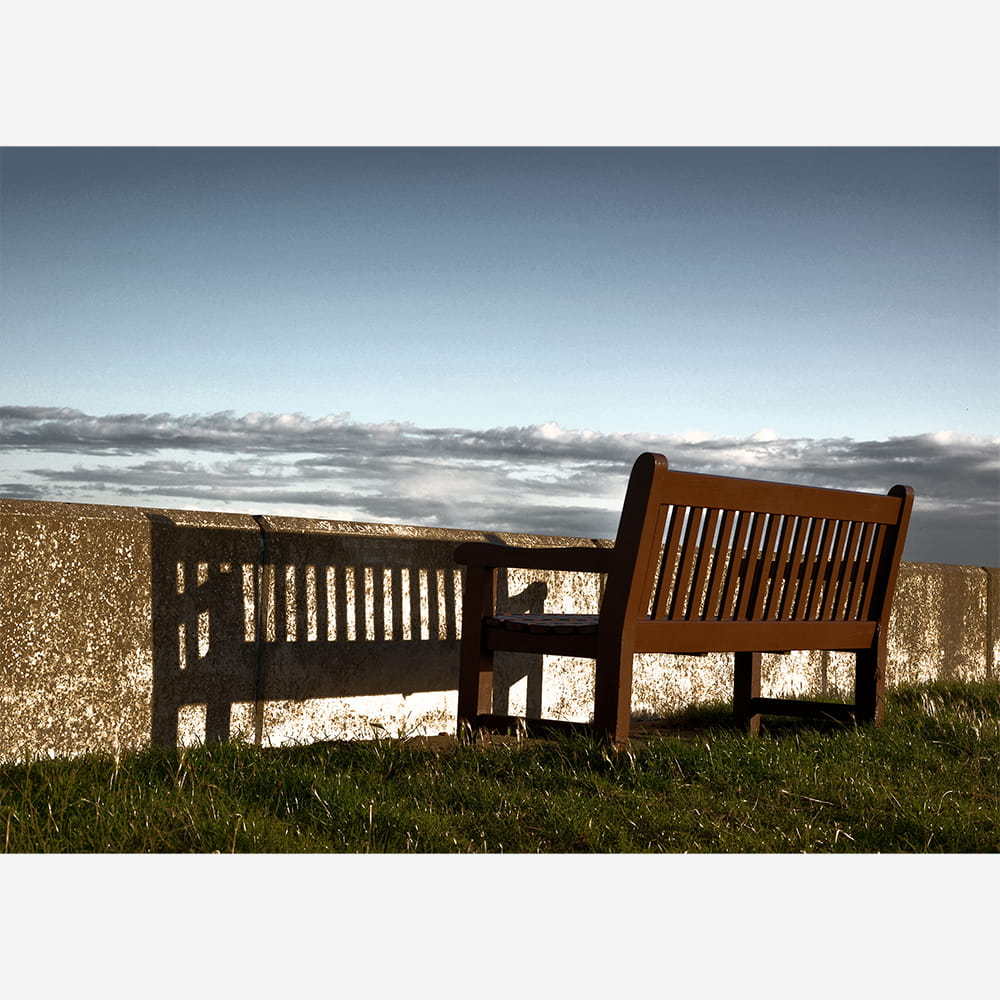
QUIET HORIZONS: Seaside bench on the Kent coast, UK
The wooden bench stands like a lonely sentry atop the sea wall at Dymchurch, its back turned to the marshlands of Romney, its gaze fixed perpetually on the English Channel. In this moment, the sun is low, casting a dramatic, skeletal shadow against the weathered concrete. The shadow is a perfect, dark twin, stretching out as if trying to reach the water that remains hidden just beyond the wall’s edge.
The bench is empty now, but its timber holds the ghosts of a thousand fleeting moments.
The Echoes of the Past
Not long ago, this wood was warm. Perhaps it was an elderly couple, regulars who walked the promenade every Tuesday, sharing a thermos of tea while watching the tide reclaim the sand. They spoke in the comfortable shorthand of forty years together—mostly about the grandchildren or the stubbornness of the garden weeds.
Or perhaps it was a solitary traveller, someone who had driven down from the noise of London just to hear a sound that wasn’t a siren. They would have sat here, shoulders hunched against the wind, staring at the horizon until the internal noise finally settled into the rhythm of the waves hitting the stone. The bench was their silent confessor, absorbing the weight of thoughts they couldn’t vocalize.
The Secrets of the Sea Wall
Dymchurch has always been a place defined by what it holds back. The sea wall is a titan of defence, and the bench sits atop it like a crown. Below, on the other side, the vast expanse of the beach waits. When the tide is out, the sand is a ribbed mirror reflecting the Kentish sky.
The shadow cast by the bench right now feels heavy with a specific kind of liminal tension. It is the “in-between” time—the transition from the golden hour to the bruised purple of twilight.
What Happens Next?
As the sun dips further, the shadow will stretch until it dissolves into the general darkness. But the bench won’t stay empty for long.
At midnight: A pair of teenagers might sneak away from the nearby caravan parks, huddled together in the cold, sharing a first, clumsy kiss while the wind howls.
At dawn: A fisherman will rest his heavy gear here for five minutes, checking his equipment under the pale light of a headlamp before descending to the shore.
By noon tomorrow: It will be a theatre seat for a family eating vinegar-soaked chips, guarding their salt-crusted treats from the opportunistic gulls circling overhead.
For now, the bench simply waits. It is a humble monument to human presence in a landscape dominated by the ancient, indifferent sea. The shadow it casts is a reminder that even when we are gone, the places where we rested remain, ready to hold the next story.